Sunday, December 12, 2010

puffer fish pictures

Pufferfish are poor swimmers, but can quickly ingest huge amounts of water to turn themselves into a virtually inedible ball several times their normal size.

Biologists think pufferfish, also known as blowfish, developed their famous “inflatability” because their slow, somewhat clumsy swimming style makes them vulnerable to predators. In lieu of escape, pufferfish use their highly elastic stomachs and the ability to quickly ingest huge amounts of water (and even air when necessary) to turn themselves into a virtually inedible ball several times their normal size. Some species also have spines on their skin to make them even less palatable.

A predator that manages to snag a puffer before it inflates won’t feel lucky for long. Almost all pufferfish contain tetrodotoxin, a substance that makes them foul tasting and often lethal to fish. To humans, tetrodotoxin is deadly, up to 1,200 times more poisonous than cyanide. There is enough toxin in one pufferfish to kill 30 adult humans, and there is no known antidote.

Amazingly, the meat of some pufferfish is considered a delicacy. Called fugu in Japan, it is extremely expensive and only prepared by trained, licensed chefs who know that one bad cut means almost certain death for a customer. In fact, many such deaths occur annually.

There are more than 120 species of pufferfish worldwide. Most are found in tropical and subtropical ocean waters, but some species live in brackish and even fresh water. They have long, tapered bodies with bulbous heads. Some wear wild markings and colors to advertise their toxicity, while others have more muted or cryptic coloring to blend in with their environment.

They range in size from the 1-inch-long (2.5-centimeter-long) dwarf or pygmy puffer to the freshwater giant puffer, which can grow to more than 2 feet (61 centimeters) in length. They are scaleless fish and usually have rough to spiky skin. All have four teeth that are fused together into a beak-like form.

The diet of the pufferfish includes mostly invertebrates and algae. Large specimens will even crack open and eat clams, mussels, and shellfish with their hard beaks. Poisonous puffers are believed to synthesize their deadly toxin from the bacteria in the animals they eat.

Some species of pufferfish are considered vulnerable due to pollution, habitat loss, and overfishing, but most populations are considered stable.
puffer fish pictures

Friday, December 10, 2010

marbled cone snail

Conus marmoreus, common name the "marbled cone", is a species of predatory sea snail, a marine gastropod mollusk in the family Conidae, the cone snails, cone shells or cones. This is an Indo-Pacific species which is believed to feed mostly on marine molluscs including other cone snails[1].
This snail is venomous, like all cone snails. However it is significantly less venomous than other cone snails, especially the fish-eating species, and poses no danger to humans
marbled cone snail
marbled cone snail
marbled cone snail
marbled cone snail
marbled cone snail
marbled cone snail
marbled cone snail
marbled cone snail
marbled cone snail

Wednesday, December 8, 2010

most dangerous animals

most dangerous animals

Tuesday, December 7, 2010

newf black dog pictures

The Newfoundland is a large breed of dog. Newfoundlands can be black, brown, grey, or black and white. They were originally bred and used as a working dog for fishermen in the Colony of Newfoundland, now part of Canada. They are known for their giant size, tremendous strength, calm dispositions, and loyalty. Newfoundland dogs excel at water rescue due to their muscular build, thick coat, webbed feet, and innate swimming abilities
Appearance
Newfoundlands ('Newfs', 'Newfies') have webbed feet and a water-resistant coat.[1] Males weigh 60–70 kg (130–150 lb), and females 45–55 kg (100–120 lb), placing them in the "Giant" weight range. Some Newfoundland dogs have been known to weigh over 90 kg (200 lb). The largest Newfoundland on record weighed 120 kg (260 lbs) and measured over 6 feet from nose to tail, ranking it among the biggest Molossers. They may grow up to 22–28 inches tall at the shoulder.
The American Kennel Club (AKC) standard colors of the Newfoundland dogs are black, brown, gray, and landseer (black or brown head and white and black body); The Kennel Club (KC) permits only black, brown, and landseer; the Canadian Kennel Club (CKC) permits are only black and landseer. The Landseer is named after the artist Sir Edwin Henry Landseer, who featured them in many of his paintings. AKC, CKC, and KC all treat Landseer as part of the breed. Fédération Cynologique Internationale (FCI) consider the Landseer to be a separate breed; others consider it only a Newfoundland color variation
newf black dog pictures
newf black dog picturesThe Newfoundland's extremely large bones give it mass, while his large musculature gives it the power he needs to take on rough ocean waves and powerful tides. These dogs have great lung capacity for swimming extremely long distances, and a thick, oily and waterproof double coat which protects them from the chill of icy waters. The droopy lips and jowls make the dog drool, but the purpose of his design gives passageways that allow the dog to breathe even when its mouth is full and swamped by waves.
In the water, the dog's massive webbed paws give it maximum propulsion. The swimming stroke is not an ordinary dog paddle. Unlike other dogs, the Newfoundland moves his limbs in a down-and-out motion, which can be seen as a modified breaststroke. This gives it more power with every stroke.
[edit]Temperament
The Newfoundland dog is legendarily known for its calm nature and its strength. It is for this reason that this breed is known as "the gentle giant". International kennel clubs generally describe the breed as having a sweet temper.[1][2][3] It typically has a deep loud bark, is easy to train if started young, makes a fine guardian or watchdog. It is exceptionally good with children, giving it the nickname "the nanny dog." The breed was memorialized as "Nana," the beloved dog guardian in Peter Pan.
The Newfoundland dog is also extremely good with other animals. Its caring and gentle nature comes out in play and interaction with humans and animals alike. As with any breed, the Newfoundland can have dominance issues, but this is unusual for the breed
newf black dog pictures
newf
newf pictures
newf picturesThere are several health problems associated with Newfoundlands. Newfoundlands are prone to hip dysplasia (a malformed ball and socket in the hip joint). They also get Elbow dysplasia, and cystinuria (a hereditary defect that forms calculi stones in the bladder). Another genetic problem is subvalvular aortic stenosis. This is a common heart defect in Newfoundlands involving defective heart valves. SAS can cause sudden death at an early age.
newf pictures
Monday, December 6, 2010

black snakes pictures

black snakes picture
black snake
black snake picture
black snakes
dangerous black snakes picture
black snakes picture
black snakes
black snakes
black snakes

Sunday, December 5, 2010

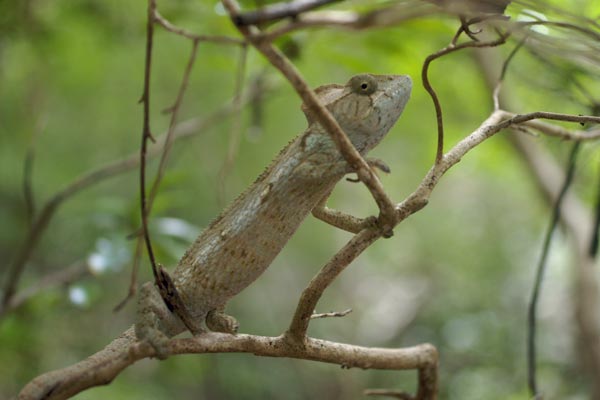
oustalet chameleon

Scientific Name: Furcifer oustaleti
Geographical Range: Madagascar, Nairobi, and Kenya.
Habitat: Warm and humid costal lowlands, but prefers drier forests.
Diet in the Wild: Primarily insectivorous, but known to eat birds and lizards
Conservation Status: Abundant.
Location in the Zoo: Herpetarium.
Physical Description:
Special Adaptations:

For beginners, reptiles are cold-blooded, so they rely on the sun's heat to keep their blood thin enough to flow through veins. This allows the reptile to eat far less than a mammal of the same weight, useful if the mammal is in competition for food.

Next is the skin of the chameleon, which can be divided into four highly specialized layers. The outer layer is a constant cell factory, always repairing broken cells. The scales of the outer layer contain no pores, further economizing the chameleon's efficiency of scarce resources. The next layer, under the scales, contains simple yellow pigments -- hardly special compared to the rest. The third layer contains a magnificent system of particles, each measuring less than .00004 cm, small enough to scatter white light. The fourth layer contains cells, each filled with countless pigment particles named melanin. Hormones from the chameleon cause melanin to either attract or repel one another. When fully attracted to one another, the pigments of the fourth layer are barely visible, and no longer absorbing enough light to make the second layer's pigment subordinate -- you see yellow. When fully repelled from one another, the pigments of the fourth layer seem to occupy the entire cell, absorb the majority of incoming light, and turn very dark. Together, the bottom three cells work to produce all of the colors seen on a chameleon, but the repelling and attracting properties of the fourth layer are behind the entire "color changing" phenomenon.

Chameleons are arboreal reptiles. They spend most of their life above ground, in trees and bushes. Because of this, the feet and tail of the chameleons are highly specialized in climbing and balance. The four feet of a chameleon are zygodactyle, in that the toes grow in groups on opposite sides of one another, perfect for grasping around a branch. The tail is like a fifth leg in two ways: it is prehensile, so the chameleon can use it to grasp nearly any size branch, and it is heavy, so it can also be used as a counter balance.
Oustalet's Chameleons are very large. The majority of its size is in length, and reports up to 70 cm are almost common. The prehensile tail can grow up to 1.5 times the body's length, and the tongue can be as long as both combined. The casque that found on top of the head resembles a shield, and changes colors on the front and back sides. The feet grow toes in pairs of twos and threes. The front toes have two on the outside, and three on the inside, but the hind feet are opposite. Hatchlings typically weigh .8 of a gram, and are already adapted with a small version of a casque. Females are typically smaller and more brightly colored than the males.

oustalet chameleon
oustalet chameleon
oustalet chameleon
oustalet chameleon
oustalet chameleon
oustalet chameleon
oustalet chameleon
oustalet chameleon
The tongue of a chameleon is covered with a sticky liquid. It can travel at a speed of 13 miles per hour, and the mechanism propelling it accelerates to 20 feet per second, in 20 milliseconds. The principle that accelerates the tongue works in the same way as a bow and arrow. Such an amazing hunting tool allows the chameleon to catch prey much faster than insects. As you can see in the picture, the tongue ends in a suction cup.

The speed of the tongue, along with the suction cup at the end, makes the chameleon a successful hunter. And surprisingly, because of the complex camouflage system, this chameleon is also a successful prey.

And finally, there is the rudimentary third eye of the chameleon. Found between the developed pair is another eye, not as sensitive as the others, but still useful for detecting shades.
oustalet chameleon